SOUTH AFRICA’S PREMIER EQUESTRIAN MAGAZINE
DIGITAL ISSUE 175A | 2026

Welcome,
We’re delighted to have you here for another edition of HQ Magazine.
This month, we begin at Landskroon, where a rescue effort during the war in Ukraine has grown into a breeding programme and South Africa’s first Akhal-Teke foal. From there we travel to Dartmoor, and ask what a distant welfare row can teach us about valuing the heritage breeds on our own doorstep.
The health pages then turn to the hours we tend not to watch: what really happens overnight between last feed and first; how proprioception shapes every ride without our noticing; and why the same horse can feel wonderful one day and flat the next. We also sit down with Andrea, the new face behind Stride Equine Research, and, as ever, AskHQ takes on your questions.
As always, a huge thank you to our advertisers, without whom this magazine would simply not be possible. We hope you enjoy this edition and look forward to seeing you next time.
Lizzie and
the HQ team xxx
Dr Lizzie Harrison | Editor
Photography | Tracy Robertson
Designer | Mauray Wolff
DIGITAL ISSUE 175A | 2026
CONTENTS
Landskroon Stud
The home of the Akhal-Teke
When a heritage breed becomes inconvenient
What Dartmoor teaches us about valuing our own
Proprioception
The rider’s hidden superpower
The night shift
What really happens between last feed and first
When in doubt, call
What new wound research means for our horses
Meet Andrea
from Stride Equine Research
Why your horse feels amazing one day
And awful the next
AskHQ
Your questions answered


photography: Tracy Robertson
Landskroon Stud
The home of the Akhal-Teke
Few horses carry the mystique of the Akhal-Teke. Bred for more than three thousand years by the nomadic Teke people of what is now Turkmenistan, these desert horses are known for a fine coat that can catch the light like metal, and for the deep, almost singular bond they form with one person. They are also among the rarest horses on earth, with fewer than 7000 remaining worldwide.
Until recently, South Africa had none. That changed when Landskroon’s owner, Tonya Ehlers, moved by the plight of Akhal-Tekes caught up in the war in Ukraine, set out to bring a handful to safety, and ended up building a breeding programme in the Cape alongside yard manager and rider Dominique Tardin. Today, Landskroon Akhal-Teke Stud is home to horses rescued from Ukraine and bought from Russia, and to Ragnar, the first Akhal-Teke foal born on South African soil. Here, Tonya and Dominique tell us how it began, what sets the breed apart, and what its future might look like here.

THE STORY OF LANDSKROON STUD
HQ: What first drew you to the Akhal-Teke breed? Were you particularly interested in the breed before acquiring any of the horses yourself?
TE: I’ve always been fascinated by the history and rarity of the Akhal-Teke. Owning one of those striking golden horses I’d seen in pictures was a long-held dream of mine. When I bought Landskroon, I hoped that one day I might have an Akhal-Teke of my own, but I never imagined I’d end up with so many. It has been a joy to watch them develop into truly special horses. And yes, among the various colours, I’m lucky enough to have two golden ones.
I’ve always felt a strong connection to horses, and when my children were a bit older, we all took up riding together. I bought a few horses, which came with us when we moved to Cape Town. At Pearl Valley, I met Dominique, who was managing the stables at the time. It soon became evident that the two of us had the same ideals as far as horses are concerned. Inspired by this passion, I purchased Landskroon, and we created a fully equipped equestrian centre, thus establishing Landskroon Equestrian and Landskroon Akhal-Teke Stud. This was a dream come true for both Dominique and myself. We share a deep love for horses in general and a strong commitment to their well-being.

I have not ridden for a while due to time constraints, and I leave all the managing, training and competing in Dominique’s competent hands. We often joke that I’m now a horse collector. All of the foals are born on my property in Val de Vie, and I take great pleasure in watching them grow and develop from birth and through weaning.
HQ: Your involvement with the breed began in a very unusual way, through a GoFundMe campaign to help horses in Ukraine. Can you tell us how that story unfolded?
TE: I was deeply aware of the impact the war in Ukraine was having on horses in the region, particularly on Akhal-Teke breeding farms. I learned that the USA Akhal-Teke Breed Society was raising funds to support the affected horses and I regularly contributed to their cause. Then one day, I had a different thought: rather than simply donating, why not try to help more directly? I decided to rescue a few myself and initially planned to purchase three from struggling breeders.
What began as a plan for three soon grew into seven. I rescued three from Ukraine and went on to purchase four from Russia. At the time, I didn’t really know what to look for, but to me each one was undeniably beautiful in their own way.
HQ: Importing horses from multiple countries must have been a complex process. What were some of the biggest logistical challenges you faced bringing Akhal-Tekes to South Africa?
TE: Purchasing the horses, especially those from Russia, came with significant logistical challenges due to the European embargo. No country was willing to accept cargo from Russia, so we had to find an alternative route and a country that would agree to receive the horses. Their journey was long and complicated, including a mandatory one-month residency before they could even enter quarantine in Europe.
Fortunately, the horses from Ukraine faced fewer complications. They were able to travel to Holland a month later to complete their one-month quarantine. In the end, all of the horses were able to travel to South Africa together.
While the Ukrainian horses were in quarantine, we decided to put one of the mares, Astrid, in foal. From start to finish, it took nearly five months for the horses to arrive safely in Cape Town. Nine months later, we welcomed our first foal, Ragnar.

HQ: You now have horses from Ukraine, Russia, and bloodlines connected to Germany. How important is genetic diversity when establishing a new breeding population?
TE: Genetic diversity is absolutely critical when you’re establishing a new breeding population; it’s one of the main factors that determines long-term health, performance, and sustainability. A diverse gene pool lowers the chance of inbreeding, which can lead to inherited defects, reduced fertility, weaker immune systems and overall poorer performance. Genetically varied horses are also typically more robust. They tend to handle environmental stress, disease, and changing conditions better than a narrow, inbred population.

HQ: The first Akhal-Teke foal born in South Africa is a milestone. What did that moment mean for you and for the future of the breed in this region?
TE: The moment was incredibly meaningful, both personally and for the breed as a whole.
On a personal level, it felt like the realisation of a long-term vision. Navigating the challenges of importing and breeding, and then finally seeing a healthy foal born on South African soil made all the effort feel worthwhile.
It also marked a real turning point for the future of the Akhal-Teke in this region. That first foal wasn’t just an individual success; it was proof that the breed can establish itself locally. It showed that we don’t have to rely solely on imports and that we can begin building a sustainable homegrown population adapted to our environment.
HQ: What are your long-term goals for the Akhal-Teke breeding programme at Landskroon?
TE: My long term vision for the Akhal-Teke breeding programme at Landskroon is to build something that is both true to the heritage of the breed and sustainable in a South African context. At the core, the goal is to establish a genetically diverse, high-quality foundation herd. That means carefully selecting and combining bloodlines to preserve the defining characteristics of the Akhal-Teke.

Beyond that, I want to focus on functional, versatile horses. The aim isn’t just to breed for appearance, but for performance, soundness, and temperament; horses that can excel in disciplines like endurance, dressage, jumping, eventing, or as reliable riding partners. I want to grow the breed locally. That includes making quality horses available to other breeders and riders and educating people about the Akhal-Teke and its unique qualities.
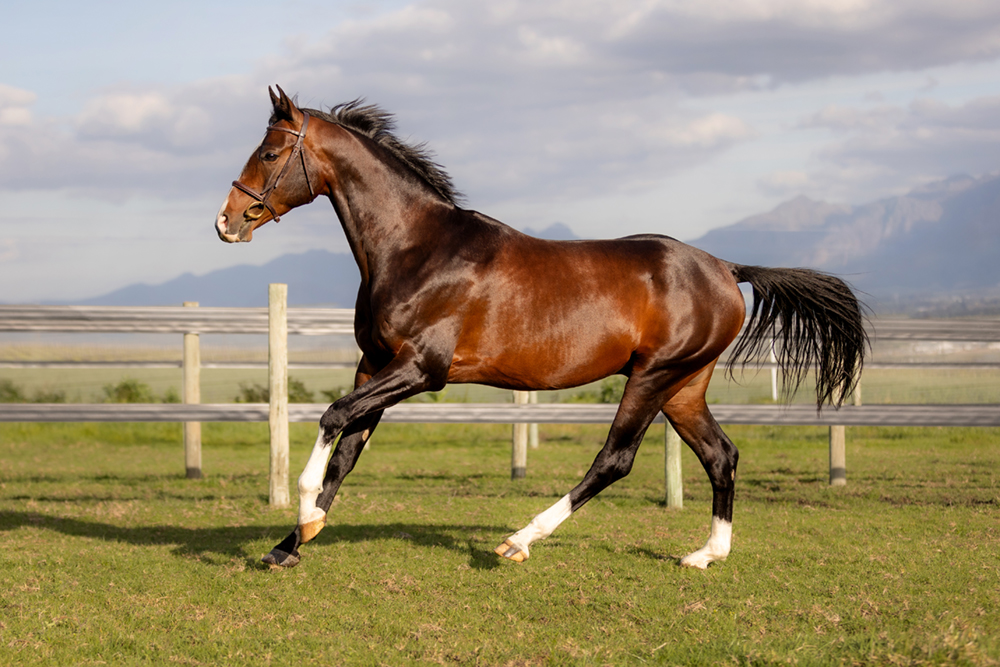
THE BREED
HQ: For readers who may not be familiar with the breed, how would you describe the Akhal-Teke in terms of temperament, athletic ability, and character?
TE: In terms of temperament, they are known for being highly intelligent, sensitive and deeply loyal. They tend to form a bond with one person in particular, almost like a partnership rather than a typical horse-rider relationship. Because of that sensitivity, they respond best to calm, consistent handling.
Athletically, the Akhal-Teke is incredibly versatile. They’re naturally efficient movers, with a light, ground-covering stride that makes them especially well-suited to endurance riding. At the same time, they have the elasticity and balance required for dressage, and the agility for jumping.
In terms of character, what really stands out is their presence. They have a certain elegance and pride often described as almost ‘regal’. They’re alert, aware of their surroundings and often quite expressive.

HQ: How well do the Akhal-Tekes adapt to South African conditions and climate?
TE: The Akhal-Tekes are also known as desert horses. This means they tolerate extreme heat and extreme cold very well. However, with the pink-skinned horses who also have blue eyes, we take precautionary measures when it comes to the elements. They are covered with a fly mask and fly sheet in summer, and in winter, they have their general winter blanket on, but still wear a fly mask. Akhal-Tekes don’t really grow a winter coat, which makes show preparation a breeze!
HQ: You have emphasised competing the horses to showcase their athleticism. In which disciplines do Akhal-Tekes typically excel?
TE: The Tekes we have are excelling in dressage, showing, and show jumping. It is apparent, based on the success at home, that they will be better with higher dressage movements once their bodies have matured. Those we selected for dressage also do very well in showing as they have beautiful conformation, colour and movement. We also have three young horses showjumping, one of which is in Pretoria with Shaun West.

HQ: If someone were considering owning an Akhal-Teke, what should they know about the breed before taking the plunge?
TE: Before purchasing an Akhal-Teke one needs to understand that they are to be with you for their whole life. Once you have decided to take on an Akhal-Teke and that horse chooses you, there is very little chance of it being a happy horse if it is passed around due to the deep bond they build with their owner. The Akhal-Tekes are low-maintenance horses; in a sense, their coats are wonderful to maintain, they don’t grow thick feathers, nor do they have any skin reaction tendencies to the environment. They are straightforward to feed and care for. Their routine is important to them, but they are accepting of change too. Be prepared for always being shown a mirror of yourself as a horsewoman/man and rider!

THE FUTURE
HQ: With fewer than 7000 horses worldwide, what are the main challenges facing the breed today?
TE: There is limited awareness and demand. Compared to more established sporthorse breeds, the Akhal-Teke is relatively unknown. Lower demand can discourage breeders, limit investment and slow the growth of the population. The biggest challenge is to show riders that the breed can be highly competitive in most disciplines.
HQ: Where do you see the future of the Akhal-Teke breed globally, and what role could South Africa play in its preservation?
TE: The breed is continuously growing worldwide. Breeders throughout America and Europe have Akhal-Tekes successfully competing in various disciplines around the world. I, in fact, have a young Akhal-Teke based in Spain, training for the Young Horse Championships. We are hoping that he will qualify for the World Young Horse Championships in 2028. As far as I know, if we can achieve that, he will be the first Akhal-Teke to do so.

I truly believe there is a future for the development and preservation of the Akhal-Teke in South Africa. People are quite wary of something new, and the Akhal-Teke is something very new and ‘different’. However, the more we take them out and people see how truly special they are, the more interest we generate in them. We are busy growing our own Akhal-Teke Breed Society and hope to soon be in the same league as the many other Breed Societies in South Africa.
From a single act of rescue, Landskroon has grown into something larger: a foundation herd, a developing local breed society, and a small but real case that the Akhal-Teke can thrive far from the steppes that shaped it. With young horses already out competing in dressage, showing and showjumping, and a prospect in Spain aiming at the 2028 World Young Horse Championships, the stud’s ambitions reach well beyond the Cape and South Africa! Thank you Tonya and Dominique for all the work you do for this magnificent breed!


When a heritage breed becomes inconvenient
What Dartmoor teaches us about valuing our own

If you have never stood on Dartmoor, picture a high, windblown moor in the southwest of England, and scattered across it, in small family groups, semi-wild ponies that have grazed that ground for thousands of years. They are tough, low-set and unbothered by weather that sends everything else looking for shelter. This year, they have become the subject of one of the most heated animal-welfare rows Britain has seen in a long while.
More than 200,000 people have signed a petition to protect the Dartmoor Hill Pony, whose breeding population now sits at just under a thousand. The campaign has drawn in members of parliament from across the political divide, and even the Prime Minister has said the government will not support a cull. To anyone watching from South Africa, it might look like a peculiarly British storm in a peculiarly British teacup. But if we look a little closer, it’s worth learning some lessons from the situation in the UK right now.

WHAT IS ACTUALLY HAPPENING
It is worth being precise here, because the story is easy to oversimplify, and the truth is more tangled than the headlines suggest.
No one has ordered the ponies killed. Natural England, the government conservation body at the centre of the dispute, has said plainly that it is not recommending a cull, that it has no power to order one, and that it values the part ponies play in keeping the moor healthy. The ponies are, after all, conservation grazers. They eat molinia, a coarse, invasive grass that crowds out other plants and, when it dries, fuels wildfires like the one that burned through more than a thousand acres of Dartmoor last year. On the science, the ponies are part of the solution, not the problem.

The fear is subtler than a cull, and that is exactly what makes it instructive. As the older grazing schemes come to an end this summer, commoners who want to qualify for the new public funding will need to cut overall livestock numbers sharply, by as much as 89% on some land, according to the campaigners’ reading of the contracts. Crucially, ponies are now counted within those overall quotas, alongside cattle and sheep. When a farming family has to choose which animals to keep within a shrinking allowance, the commercially viable cow or sheep tends to win, and the pony, which earns its keeper almost nothing, is the one quietly taken off the moor.

A Defra-commissioned review of Dartmoor had specifically recommended that ponies not be lumped into the same stocking calculations as cattle and sheep, and that decisions avoid driving pony numbers down. Campaigners, including the Dartmoor Hill Pony Association and the Friends of the Dartmoor Hill Pony, want that recommendation acted on, and warn that warm words from politicians have not yet become anything concrete.
In this case, then, the threat comes from a spreadsheet of numbers and the consequence of those numbers for farmers trying to manage in a difficult economic climate.
HOW HERITAGE BREEDS REALLY DISAPPEAR
Breeds rarely vanish by decree (thankfully!). However, they do fade out when the structures around them no longer reward their existence. A pony that does not ‘pay its way’ on land where every grazing slot now carries a price, means that farmers need to be sentimental about the ponies, rather than use economic sense. Sadly, in these times in the UK, sentiment is not going to carry anyone very far. Multiply that single decision across enough farms and enough seasons, and a population that survived for millennia can slip below the point of genetic viability within a generation.

The Dartmoor campaigners make this case well. Their argument is that the right animal, in the place it has adapted to over thousands of years, is not a luxury but a working tool: for biodiversity, for fire prevention, for a functioning landscape. They look at the bigger picture, and in this context, the short-term economic savings, would remove something cannot easily be replaced once lost.
That is the thread worth pulling for a South African reader, because the mechanism is universal even where the specifics of the situation are clearly not.

CLOSER TO HOME
We have our own heritage horses, and they deserve rather more than a fond, occasional nod.
The Nooitgedachter, for instance, is one of the very few breeds South Africa can call entirely its own. Sure-footed, level-headed and built for our terrain and our climate rather than for a European arena, it is a horse shaped by this country. The Boerperd carries generations of local history in its bloodlines, valued for its versatility, temperament, and the comfort of its paces. The Basuto pony itself, forged by the mountains of the region, long ago became a byword for endurance and toughness. These animals are not museum pieces. They are animals shaped by precisely the conditions our riders actually ride in.
To be clear, this article is in no way a rescue appeal, and it makes no claim about how our breeds are faring one way or the other. Rather, prompted by a moor in the home country of our Editor, it is a reminder that the breeds which are uniquely ours are the easiest of all to take for granted, precisely because they ask so little of us and demand so little attention.

THE WARMBLOOD QUESTION
Most of us who compete do so on Warmbloods or Warmblood types, and for good reason. They are bred, with extraordinary care and over many generations, to do exactly what modern dressage and showjumping demand, and they win because they are the right fit for that particular job. No one should feel a flicker of guilt for choosing the horse that suits their sport!
However, a stable, a sport and a country are all the healthier for breadth. The Warmblood earns its place on merit, and so does the local breed, on a different set of merits: hardiness, soundness, an easy mind, a willingness to turn its hoof to almost any discipline or terrain, and a constitution suited to African conditions rather than imported ones. Valuing the one has never required dismissing the other. The real risk is not that we will all suddenly abandon our local horses overnight. It is that we will simply stop thinking about them at all, until the day when thinking about them is no longer an option.
THE LESSON FROM THE MOOR
Dartmoor’s ponies may yet be saved. The politics are still moving, the pressure is real, and a great many people are determined not to let them go, but whatever the outcome, the episode serves as a useful reminder. It shows how a breed can be loved by hundreds of thousands of people and still be edged toward the margins, not by cruelty or by any single villain, but by the slow, quiet arithmetic of what pays and what does not.
Our own breeds are not on a moor, and they are not in anyone’s headlines, which is exactly why they are worth a deliberate thought now, while the choice to value them remains entirely ours to make.


TEXT: Alejandra Gonzalez
Proprioception
What new wound research means for our horses

Ever feel like one leg just… disappears?
You’re riding a circle to the left, applying your inside leg like you always do. But for some reason, your horse isn’t responding the same way they do on the right rein. You check your position – your leg is there, you’re pressing evenly, but it still feels like your left leg just isn’t ‘connecting’ the same way.
This isn’t just a strength or technique issue; it’s proprioception.
WHAT IS PROPRIOCEPTION?
Think of proprioception as your body’s internal GPS. It’s what tells your brain where your limbs are, how much effort you’re using, and how you’re moving, all without looking.
When proprioception is off, certain areas of your body, like your left leg or one seat bone, might feel less clear, making your aids inconsistent and your balance unstable.

The best part?
You can improve proprioception, just like you can build strength or flexibility. And it can completely transform your riding.

WHERE DOES PROPRIOCEPTION COM FROM?
Your body has thousands of tiny sensors sending real-time updates to your brain about position, movement, and force. Here’s where they live:
- Muscles (Muscle Spindles): Sense stretch and movement speed.
- Tendons (Golgi Tendon Organs): Measure tension and force.
- Joints and Ligaments (Ruffini Endings and Pacinian Corpuscles): Provide joint position, pressure, and vibration feedback.
- Fascia (Free Nerve Endings and Interstitial Receptors): Continuously monitor movement and tension.
- Skin (Ruffini Endings, Merkel Discs, Meissner and Pacinian Corpuscles): Detect stretch, pressure, and vibration, refining your awareness of posture, symmetry, and balance
- Inner Ear (Vestibular System): Handles balance, spatial awareness, and coordination.

WHY SKIN PROPRIOCEPTION MATTERS FOR RIDERS
Your skin is constantly picking up subtle shifts in pressure, stretch, and movement. And it’s more important for riding than you might think.
✅ Stretch receptors in your skin help detect joint angles and movement, essential for staying aligned in the saddle.
✅ Vibration and pressure receptors allow you to feel movement changes instantly, improving your reaction time and connection with your horse.
✅ If your skin is compressed or desensitised (think tight clothing or gripping too hard), your proprioception decreases.
The more your skin can feel, the better your brain can process small changes and keep you balanced.

WHY PROPRIOCEPTION IS SO IMPORTANT FOR RIDERS
Great riding isn’t just about strength or flexibility. It’s about awareness, coordination, and precision – all of which depend on proprioception.
Here’s how it shows up in your riding:
1. Staying balanced in the saddle
Your proprioceptors detect even the smallest shifts in your weight and position, helping you adjust before you even realise it.
✅ Sharp proprioception: You stay centred and balanced effortlessly.
❌ Poor proprioception: You tip forward, collapse to one side, or struggle to find stability.
2. Absorbing motion smoothly
The better your proprioception, the more easily your body can absorb movement without tension.
✅ Sharp proprioception: You follow your horse’s motion fluidly.
❌ Poor proprioception: You brace, bounce, or feel disconnected.
3. Applying aids with precision
Proprioception helps you use just the right amount of force for your aids.
✅ Sharp proprioception: Your cues are clear, subtle, and effective.
❌ Poor proprioception: You might grip too hard or apply aids too weakly, creating confusion.

HOW TO IMPROVE YOUR PROPRIOCEPTION
The good news? Proprioception is trainable! Just like you build strength or flexibility, you can refine your proprioceptive awareness. Here’s how:
1. Tapping for body awareness
Tapping wakes up sensory receptors and strengthens the brain-body connection.
✅ How to do it:
• Use your fingers or a soft ball to gently tap around your hips, ribs, and shoulders before riding.
• Notice if one side feels more sensitive or less clear than the other.
Try this before mounting and your body will feel more connected and responsive.
2. Balance challenges
These force your body to make small, automatic adjustments that improve stability.
✅ How to do it:
• Single-leg balance: Stand on one leg for 30 seconds per side.
• Eyes closed challenge: Try the same with your eyes closed – it’s much harder, right?
This helps train your body’s natural stability systems, just like the ones you use in the saddle.
3. Soft eyes exercise
This enhances your ability to feel movement instead of relying only on sight.
✅ How to do it:
• Instead of staring at one fixed point, allow your vision to soften and feel your horse’s movement through your seat and body.

This helps improve your reaction time and ability to adapt to movement changes.
Great riders aren’t just strong or flexible; they have highly trained proprioception.
It’s the secret to:
✅ Staying balanced effortlessly.
✅ Giving clear, effective cues.
✅ Moving in harmony with your horse instead of against them.
And the best part? You can improve proprioception! Try these simple exercises and feel the difference in your riding.
Let’s refine movement, one ride at a time.
Ale


The night shift
What really happens between last feed and first
A look at the overnight hours, the part of the feeding day we plan the least, and what new work on the equine body clock suggests we could be doing better.
Most yards have a feeding routine that ends at evening stables and resumes at dawn. Concentrates fed, hay nets filled, lights off. What happens in the ten or twelve hours in between tends to look after itself (barring a sick horse or a disruption due to show schedule). Yet that overnight stretch is the single longest part of the feeding day, and a run of recent research suggests it is also the part we understand the least, and some of the most interesting work is not about what horses eat overnight at all. It is about when they eat, and why the timing turns out to matter more than we assumed.

THE CLOCK IN THE STABLE
A circadian rhythm is an internal cycle of roughly 24 hours that the body generates on its own and then fine-tunes against the outside world. In horses, as in us, the master clock sits in a small region of the brain called the suprachiasmatic nucleus. Light entering the eye is its main signal: the ‘clock’ reads day and night and sends timing instructions out to the organs and tissues, partly through melatonin, the hormone the pineal gland releases as darkness falls. Melatonin is, in effect, the body’s message that night has arrived.

Work led by the equine chronobiologist Barbara Murphy at University College Dublin found that the horse’s melatonin rhythm is unusually light-driven rather than strongly self-sustaining. Held in continuous darkness, horses did not keep up the normal night-and-day swing in melatonin; levels simply stayed high. Horses also reset their body clocks to an abrupt time shift remarkably quickly. The takeaway is that, in the horse, the light environment we create in the barn is not a minor detail. It is one of the strongest levers we have over the animal’s internal sense of time.
That reframes a few familiar habits we tend to practice in our yards. Bright white light switched on for a late check or an early feed sends a daytime signal at the wrong hour. Blue-rich light, the kind from many LED fittings and from screens, is particularly good at suppressing melatonin in horses. Murphy’s group has shown that doing night chores under dim red light, which the horse’s clock largely ignores, avoids that disruption, and that horses kept under red light at night tend to be calmer, rest better and eat more readily. For a yard doing a 10pm check or a pre-dawn feed before a show, the colour of the light is a cheap and easy thing to get right.

WHEN HORSES CHOOSE TO EAT
The clock shapes appetite, too, and this is where the new research on feeding comes in. Kentucky Equine Research recently used chewing halters with sensors that record how long and how often a horse chews, to track stabled horses through the night. With hay in front of them, chewing was heaviest in the early evening, then eased off as the night wore on, with a clear rest phase developing in the small hours. They then began to eat again with more gusto around dawn. It was a small study, and the researchers are careful not to overstate it, but the shape matches older behaviour work: horses do most of their hay eating in daylight and the early evening, and most of their resting and sleeping in the second half of the night, resuming foraging behaviours around dawn.
It is tempting to read this research as permission to let the hay run out overnight, on the logic that horses are barely eating then anyway. That would be the wrong lesson, and a potentially harmful one. The taper describes a horse pacing himself when forage is always there: he eats, rests, and comes back to the hay through the night. Ultimately, eating less is not the same as needing nothing available. A horse dozing at two in the morning still has a stomach producing acid, and an empty net at that hour means an enforced fast, not a natural one, risking damage to the stomach lining in the form of ulcers. The overnight rhythm, and the early start at dawn, is a reason to keep forage trickling through the night, not a reason to withdraw it.

It is worth stating that this science is really in its infancy. The researchers who study the equine body clock are the first to point out that we do not yet know how much of a horse’s daily rhythm is hard-wired and how much is simply learned from the routine we impose on it. However, that uncertainty itself still gives us practical guidance. If routine is doing much of the work in keeping our horses regulated, then a consistent, predictable rhythm, with horses fed, checked and turned out at much the same times each day, is probably one of the most underrated tools in the feed room.

WHY THE GAPS MATTER
That matters because the stomach does not rest when the horse does. The horse’s stomach is small, around seven to eight percent of the gut, and it produces acid continuously, whether the horse is eating, dozing or fast asleep. A steady trickle of forage, and the saliva that chewing produces, keeps that acid buffered, whereas long gaps do the opposite. Research has repeatedly linked low forage intake, long stretches without it, and high-starch meals to a raised risk of squamous gastric ulcers. The overnight stretch is the longest forage gap most stabled horses face, which is precisely why what we do with it is important.
The practical answer is to make forage last rather than to feed more of it. A small-holed or slow-feeder hay net can stretch a measured ration across more of the night, so the horse still has hay available to pick on when he needs as well as for his dawn appetite surge. The aim is hay that is still there in the early hours, not a net that empties by midnight.
However, it is worth noting that some horses settle happily with a net while others fret at it, so it is worth watching the individual, but the goal stays the same either way: forage available through the night, not just at the start of it.

FINAL THOUGHTS
The overnight hours will probably never get the attention the morning feed does, but the emerging picture is encouraging, because almost everything it points to is reasonably affordable and within reach. If we keep the forage trickling, mind the lights and hold the routine steady, we should be giving our horses the best chance of a happy, healthy life.
References
Kentucky Equine Research (equinews) and University of Kentucky equine behaviour research
B.A. Murphy and colleagues on equine chronobiology, University College Dublin


When in doubt, call
What new wound research means for our horses
Most of us will have, at some stage, dealt with a wound, whether our horse has come in from the paddock with a gash or we spot a kick mark that wasn’t there yesterday. It is the everyday emergency, and a new study suggests that how we handle those first few hours is more variable, and more important, than we tend to realise.

Researchers at the University of Nottingham, working with the British Horse Society, asked owners to report on real wounds in their own horses, from the moment of injury through to final healing. Rather than studying horses already admitted to a referral hospital, which is where most published wound research comes from, they went to the people who see the wound first. They gathered detailed data on 219 horses, with full outcome data for 139 of them (Birnie et al., 2026).
It is worth saying up front that the study is a self-selected, owner-reported sample, mostly from the UK, so it does not tell us how common wounds are or map neatly onto our conditions here in South Africa. The authors are candid about the limits of the study in their write-up. What the study does give us, though, is an honest picture of what many owners actually do, and that picture is useful wherever you keep horses.

THE WOUNDS THEMSELVES
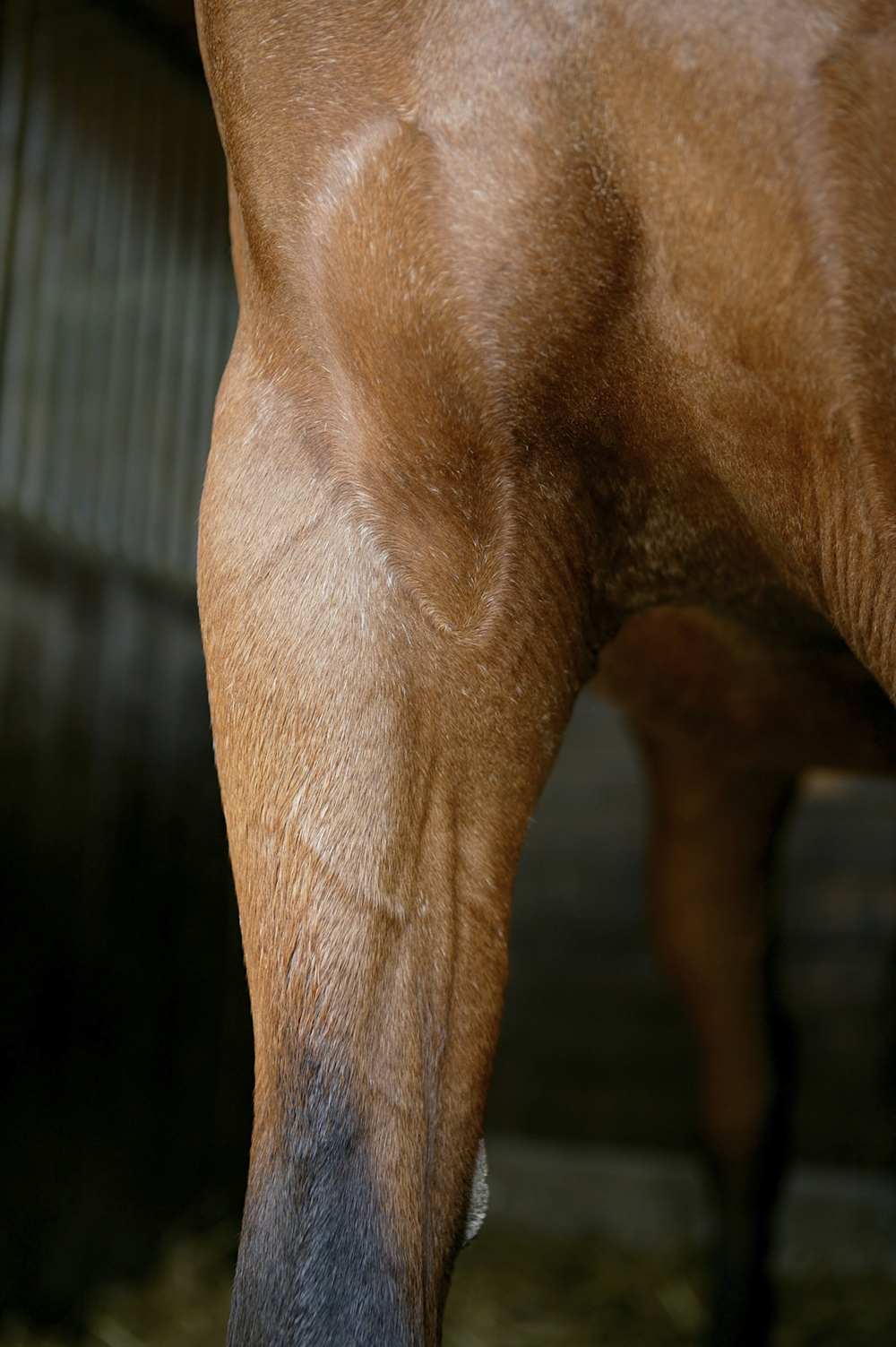
The findings of the study will not surprise any experienced stable managers here! The single most common cause of injury was wire and fencing, at 38% of cases, well ahead of kicks at 15%. The most common site was the lower hindlimb, with two-thirds of all wounds occurring on a limb (Birnie et al., 2026).
This fact matters because, unfortunately, limbs are where the trouble hides. As Horse and Hound’s veterinary contributor Karen Coumbe pointed out when the study was published, the position of a wound matters more than its size. As she notes, a large, dramatic-looking gash over muscle may heal cleanly, while a small puncture near a joint or tendon sheath can be career-ending or worse if it reaches a vital structure. Ultimately, the horse that looks lamer than the wound seems to justify is the one to worry about.
The study also revealed that the healing of wounds takes a lot of time. Wounds closed in a median of 60 days, and horses took a median of six and a half weeks to return to their previous level of work after the injury. Three of the 139 horses with outcome data were put down as a result of their injury (Birnie et al., 2026). Interestingly, and consistent with earlier research, ponies tended to heal within a tighter, more predictable window than horses.

OLD FASHIONED METHODS
As is often the case, the more uncomfortable findings are about us, not the horses.
Owners gave first aid in two-thirds of cases, which is the right instinct. However, a quarter of those who did gave it without washing their hands at all, and another quarter washed with water only (Birnie et al., 2026). For a wound that is, by definition, an open door to infection, that is a serious issue and a simple gap for most of us to close.
Then there is the tack-room cabinet. The products owners reached for most often were purple and blue sprays, Sudocrem, silver creams, wound powders and, less often, manuka honey. Anyone who has spent time around horses in this country will recognise most of the ingredients on that shelf, but the trouble is that several of these familiar staples are not ideal on an open wound. Purple and blue sprays, oil-based creams and some powders can interfere with healing or obscure the wound surface, and the evidence has moved on from these to newer strategies, but the research suggests that many of us are unaware of this. Tellingly, when vets in the study treated wounds, they leaned toward honey and silver dressings or hydrogels, and almost never reached for the purple spray (Birnie et al., 2026).
None of this means throwing out your first aid kit in a panic (as we nearly did!). It instead means knowing that ‘what we have always used’ and ‘what helps the wound heal’ are not necessarily the same thing.
ANTIBIOTICS
One finding from the study deserves particular attention from a profession-wide point of view. Of the wounds seen by a vet, 80% received systemic antibiotics. Coumbe described that proportion as somewhat surprising, noting that effective cleaning and dressing can often make antibiotics unnecessary, and that these are precious medicines we cannot afford to overuse (Birnie et al., 2026) due to resistance patterns.
Antimicrobial resistance is not an argument against antibiotics when they are needed, but it is an argument for good wound hygiene as the first line of defence, so that antibiotics can be held in reserve for the cases that truly need them.

THE BIT WE CAN PLAN
Perhaps the most important findings were about owner preparedness, and these do (mostly) translate directly to our conditions.
One in five owners was unsure or not confident about whether a wound needed a vet at all (Birnie et al., 2026). That hesitation, in the moment, is the difference between a wound caught early and one that has become a problem by morning.
In the study, 16% of owners had no access to emergency transport if their horse needed referral, and just over half had no insurance for veterinary fees, with around one in ten saying cost had limited their horse’s treatment. Costs ranged from nothing to several thousand pounds (Birnie et al., 2026). The specific figures are UK ones, but the lesson applies here too. If your horse is a long drive from the nearest equine hospital, as many in South Africa are, the time to work out how you would move a horse in an emergency, and how you would fund treatment is definitely before the incident, not once it has occurred.
The tetanus finding was also very relevant to our picture. In the study, 8% of horses were not appropriately covered against tetanus (Birnie et al., 2026). Tetanus is almost always fatal once established and almost entirely preventable, and a wound is exactly how it gets in. If you do one thing after reading this, make sure every horse on your property is up to date with their tetanus vaccine. There is no good reason for a horse to die of a disease that a vaccine prevents.

WHEN TO CALL THE VET
The study’s clearest takeaway is also its simplest: when you are not sure, ask. A phone photograph or short video is easy to take and gives your vet a far better basis for advice than a description down the phone (though a picture can flatter a wound, so describe what you are seeing too). Call without hesitation if a wound is near a joint, tendon or the back of the knee or hock, if it is deep or a puncture, if the bleeding will not stop, if your horse is lame or seems dull and off, or if you simply cannot tell how bad the situation is. The downside of an unnecessary call is small compared to the downside of a missed septic arthritis.

OUR TAKE AWAY – THE FIRST AID KIT
One of our biggest takeaways is that a sensible, evidence-aligned first aid kit is important for all of us. In it, we need clean water or sterile saline for flushing, a means of clean lavage, a mild antiseptic such as dilute chlorhexidine, non-stick primary dressings, padding and bandaging and clean gloves. We’re going to, at least in our first aid kit, remove the purple spray, the powders and the oil-based creams that may all have a role later on, but not in the immediate setting.
The British Horse Society, which supported this research, is due to release free wound-care resources for owners in September 2026, built on this and related work. We will flag them when they land.
References
Birnie, R., Hannelly, E., Dubuc, J., Burrell, K., England, G.C.W., Burford, J.H., Freeman, S.L. (2026). Owner-Reported Cohort Study of Causes, Management and Outcome of Traumatic Wounds in 219 Horses. Animals, 16(10), 1474. https://doi.org/10.3390/ani16101474
Freeman, S.L., Ashton, N.M., Elce, Y.A., Hammond, A., Hollis, A.R., Quinn, G. (2021). BEVA primary care clinical guidelines: Wound management in the horse. Equine Veterinary Journal, 53(1), 18–29. https://doi.org/10.1111/evj.13289


MEET
Andrea
FROM STRIDE EQUINE RESEARCH
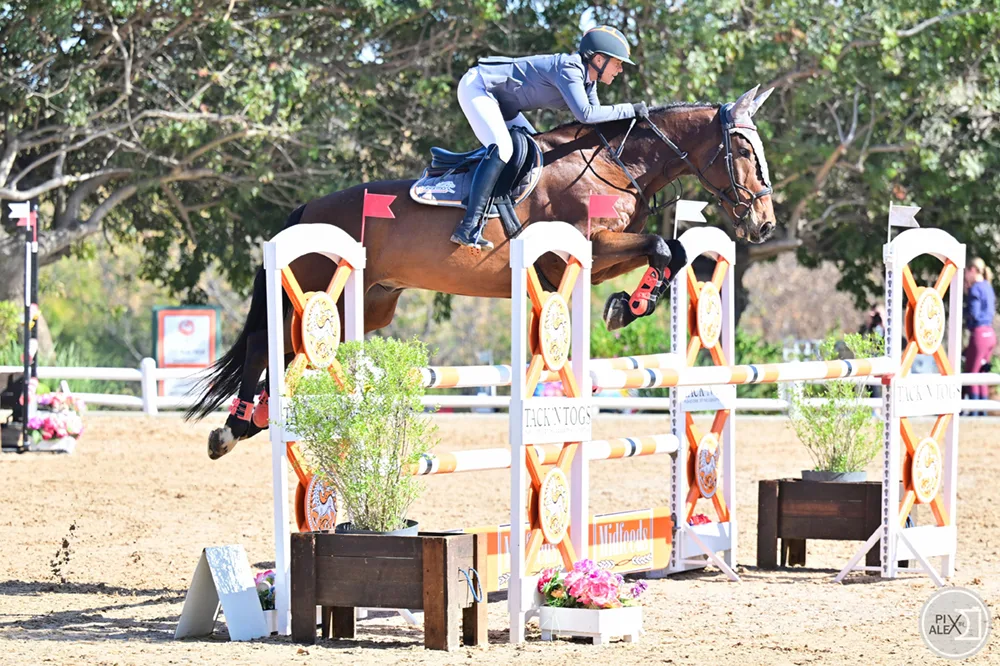
If you’ve been around the equestrian supplement market for any length of time, you’ve likely come across the Stride name. What you may not know is that the business recently changed hands, got a fresh face and a new name, and is now being driven by a passionate 27-year-old with a sharp eye for marketing and a deep love of horses. We sat down with Andrea, General and Marketing Manager of Stride Equine Research, to find out more.
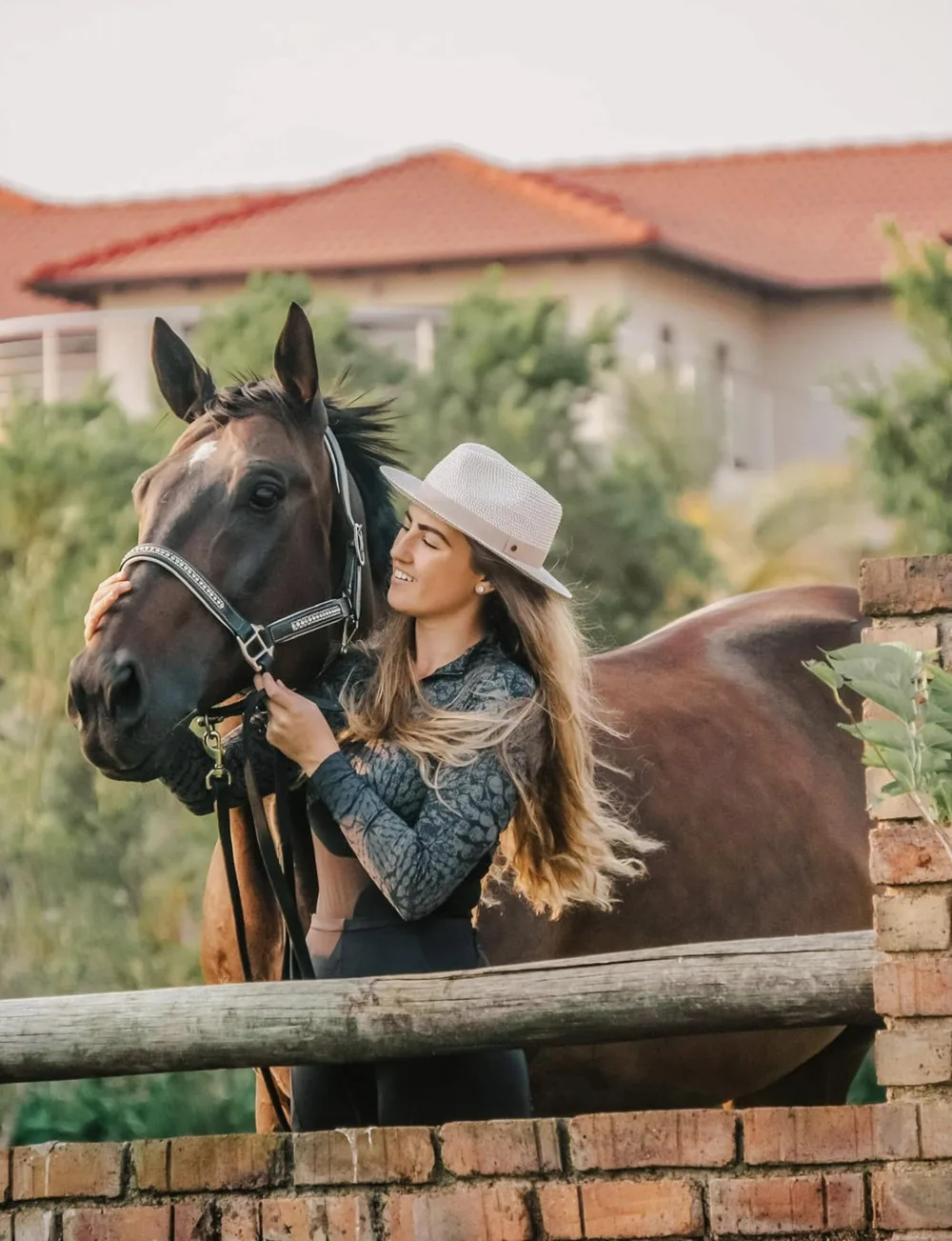
HQ: Tell us how Stride came to be in your family’s hands.
Andrea: My mom, Natalie Hime, and her partner, Stewart Barker, are involved in the human pharmaceutical business and were looking to leverage that knowledge and experience into the equine world. Stewart had met the previous owner of Stride, Dr Glynn Catton, and had expressed an interest in buying the business. When Dr Catton was ready to retire, we were able to acquire the business. We took over formally at the end of 2024.
Photography: Pix by Alex
HQ: Who makes up the team?
Andrea: Stride is 100% female owned and 100% female staffed. My mom is the owner of the business. It does help enormously that she has a pharmaceutical and medical background, particularly when it comes to product registrations and renewals, but she doesn’t have the time to be involved in the day-to-day running of it. So that’s where I came in. My official title is General and Marketing Manager. The business has two staff members: a regulatory officer who handles all our registrations, renewals and compliance requirements, Dr Shuvai Ngobeni, and a sales and office manager, Lindie van Wyk, who has been with Stride for about ten years and is wonderfully well-connected across disciplines, from dressage to showjumping to racing. When we took over, the ladies were understandably a little anxious about what the change might mean for them, but we made it very clear from the start that we needed them and weren’t going anywhere without them.

Photography: Denford Studios
HQ: And the rebrand? How did Stride Equine Research come about?
Andrea: The original name was Stride Distributors, but we felt that was doing the company a disservice. Dr Catton had put an enormous amount of research and effort into every single registered product, and the word ‘distributors’ really undersold that. We changed it to Stride Equine Research, which better reflects the science behind what we do. We did a full rebrand to reflect the new name and took the opportunity to refresh the labels and packaging of our products.

HQ: What was already working well before the rebrand?
Andrea: The products were already popular, particularly within the endurance riding community, which has probably been buying Stride products since the very beginning. Most of the endurance riders know Dr Catton personally because he used to attend endurance events often. They are, without doubt, our biggest and most loyal supporters. It’s a wonderful community and one we’re very committed to.
HQ: Tell us about the product range.
Andrea: We have quite a broad range. Our flagship product, and the one we market most actively, is our Equiworld® Fly Repellent. The fly repellent market is an interesting one because a lot of riders prefer products containing DEET, which does repel flies well but doesn’t actually reduce the fly population around your yard, it just moves them off the horse. Our fly repellent contains no DEET so does not only repel flies but also kills flies that come into contact with the horse. This is immeasurably more effective than just repelling them. It also kills ticks and mosquitoes, which, of course, carry their own risks for horses. We’ve done a lot of work promoting it, including branding a jump, running sponsorships, and bringing Zandi Alcock on board as a brand ambassador. She’s brilliant at showing people how to use a product on social media in a genuine way and she’s been a wonderful fit for us.

Photography: Crystal Baldwin
Beyond the fly repellent, we have a range of electrolyte products catering for different horses and different preferences. Not every horse will eat a powder in their feed, so we offer options: Rigly® Endurance Paste, which is a paste, Recharge, which you dilute in water, Neutralyte Liquid, which can go in water, feed, or straight into the mouth, and a powdered electrolyte for the feed as well. Then we have conditioning and muscle products, including Pharlap, which is our general conditioning supplement. We also have Rigly® MSM Plus for joint support, Thrive P for hindgut ulcers, and Bioderm Forte, a biotin-based supplement that has done remarkable things for hoof health and coat condition in our own horses. And of course, Secure Horse Flash, the pheromone supplement.

HQ: You mentioned your own horses. Tell us a bit about your equestrian background.
Andrea: My background is that I studied BCom Marketing Management and BPhil Honours in Marketing Management, and worked in sales during that time. But horses have always been my real passion. After my honours, I had the opportunity to go to Europe for three months to visit my godmother, Philippa Johnson-Dwyer, who is a Paralympic gold-medallist dressage rider for South Africa. I not only got to tour parts of Europe, but I also got to learn about yard management, mucking out, the whole European approach to horses from Philippa’s incredible lifestyle. I was also lucky enough to ride two retired dressage horses every day and receive dressage lessons from her. While I was there, I also spent some time at Oliver Lazarus’s yard, which was a wonderful additional experience.
When I came home, I was fortunate enough to take over the ride on iPharma Uber Alles. He took me from Medium all the way through to Intermediate I level, and I’m still competing with him now, though he’s getting on in years. I also have a young dressage mare that I’m keeping under wraps for now! And I did do showjumping for a while, riding Callaho Lord Max up to the 1.20m, but sadly, he passed away last year due to a freak accident.

Photography: Fine Photography
HQ: How do you keep your riding going alongside running the business?
Andrea: It keeps me very busy, I won’t pretend otherwise. Stride is honestly the first thing on my mind when I wake up and the last thing I think about at night. But I do my dressage lessons online with Philippa through a remote internet system, and when she comes to South Africa, which we’re hoping will be this year, we host a clinic at our yard and try to time it around a show so that clinic riders can also have her support at the competition. It works really well. As for the rest of my days, I have a schedule that helps me fit in three full-time rides around the management and running of Stride.
HQ: What has the response to your marketing approach been like?
Andrea: I’ve been given a wonderful amount of creative freedom, which I’m very grateful for. I introduced social media marketing and an aggressive programme of visibility at shows, including sponsorships and prizes. One initiative that got a really strong response was something we did at the Toyota Easter Festival, where instead of a standard discount, I created a pick-and-mix style bundle inspired by something I saw at a cosmetics market in Belgium. People could select a set of products for a fixed price, giving new customers the chance to try things they might never have picked up on their own. Of course, I was worried it would be too much of a loss, but that’s marketing. You have to spend a little to get people to try your product, and once they try it and see results, they come back.
HQ: How do you approach the question of whether a product will work for a specific horse?
Andrea: Although all of our products are well-researched, tested and registered, different horses will respond differently. Building trust in our brands is far more important than a one-off sale to us.
HQ: What does the future look like for Stride?
Andrea: In the short term, it’s about continuing to grow our presence and highlight products in our portfolio for specific needs. We’re also looking at adding to the range, though registering a product in South Africa under Act 36 can take anywhere from one year to seven years, so it’s a slow process. We may look at some unregistered products in the grooming and hygiene space in the meantime. The bigger long-term goal is to go international. We’re already supplying Namibia, which is a great start, but we’d love to look at markets like the UAE, given the endurance community there, and eventually North America. It will take time and research, but we’re ready for that challenge.
PRODUCT PICKS
We asked Andrea, Stewart and Natalie what their favourite products from Stride Equine Research’s extensive range are and this is what they told us:
Andrea – Liquid E and Equiworld®Fly Repellent
Stewart – Bioderm Forte and Rigly®Endurance Paste
Natalie – Rigly®Liver Tonic and Secure Horse Flash


Why your horse feels amazing one day
And awful the next
The same horse can feel like two different ‘beasts’ from one ride to the next, and from what we’ve been reading, the reason usually has less to do with the morning of the ride than with the eighteen hours before we got on.

THE PREVIOUS 18 HOURS
Every one of us knows the feeling. Monday’s horse is forward, soft and willing and we get super excited about a great week of training ahead. Wednesday’s horse, on the other hand, in the same arena, with the same plan, feels stiff, distracted and behind the leg. Most of us reach for a reason in the moment to explain the change, e.g., the wind, the new horse two stables down or a late feed. The more useful question to ask ourselves, however, is not what changed this morning, but what happened the day before.
Day-to-day variation in how a horse goes is largely the visible readout of one main thing: their recovery state. Sleep, gut function, the load from recent sessions, the weather and your own state on the day all feed into a single system, and ‘brilliant’ or ‘flat’ is the net output. None of these factors works alone, which is why chasing a single cause or trying to ‘fix’ one thing so often fails. Once you read the horse as the sum of his recent recovery and experience rather than a mystery that resets each morning, the good days and the bad days stop looking quite so random.

SLEEP
Sleep is the factor most of us think about least, and it may be the one that matters the most. Horses sleep only around three to five hours in a full day, and most of that is light, standing sleep. Restorative REM sleep happens only when a horse lies down and fully relaxes his muscles. Research using wearable sensors has shown that horses who cannot lie down comfortably, whether from pain, an insecure environment, or simply not enough clean, dry space, build a sleep debt with real consequences.
Chronically sleep-deprived horses become drowsy during the day, can partially collapse as they drift into REM while still standing, and often carry tell-tale scuffs on the front of the fetlocks and knees from those near-falls. In one study of dressage-trained horses, three days without the chance to lie down measurably reduced their memory and attention.
When this is translated to the ridden horse in the arena, the consequences are very real. A horse that slept badly because a new neighbour unsettled the yard, because the bedding was thin, or because joint pain made lying down a chore, will not feel the same under saddle as one who had an undisturbed night. The remedy is rarely very complicated, but it does require us to consider it: enough clean, dry, deep bedding; a stable or paddock the horse feels safe in; companionship within sight; and attention to any pain that might make lying down unappealing.

TRAINING LOAD
Muscle is the next layer that we need to consider. In human sport science, the soreness that follows hard or unfamiliar work, known as delayed-onset muscle soreness, peaks somewhere between one and three days after the session rather than immediately. The clearest trigger is effort the body is not yet conditioned for, especially the lengthening, ‘braking’ kind of work involved in downhill or eccentric movement.
The honest caveat is that this mechanism is better mapped in people than in horses; equine-specific research on how and when this happens is still thin. Yet, the practical pattern is familiar to anyone who has felt a horse come out stiff two days after a big jumping session or the first proper hack of a new fitness phase. The cost of a hard session often lands a day or two later, so a flat horse may simply be one still paying off Tuesday’s work. This emphasises the importance of building fitness gradually, varying the demand, and reading a flat day after a big one as information (NOT laziness!). However, persistent, painful muscle problems and the cramping and reluctance of tying up, are separate veterinary matters, so these must be looked at independently.

FEEDING
A horse’s digestive system is built to take in small amounts of forage almost continuously, and long gaps with nothing to chew on, particularly overnight, can leave the stomach exposed to its own acid. A horse who has stood for hours with an empty stomach is not starting the day in the same place as one who had forage all night. The practical lever is forage continuity rather than any specific feed: shortening the empty-stomach stretches, especially the long overnight one, supports both comfort and a steadier mood the following morning.

THE RIDER
It is tempting to put a bad day entirely on the horse, but we are a part of the system too, and the research here is interesting. Studies have shown that different riders elicit measurably different responses in the same horse: varying rein tension, heart rates, and stress-hormone levels. This all shows that the rider clearly makes a difference.
The ‘popular idea’ that a nervous rider’s fear travels straight down the reins is partly supported and partly not. One well-known study found that when riders anticipated something frightening, their horses’ heart rates rose too, even though the horses had no way of knowing what was coming. Yet other work has found that riders’ show-day nerves did not transmit to their horses at all. The fair summary is that our state is a real input for our horses, particularly our physical tension and how we manage the contact, but the horse is reading our body far more than our mood in the abstract. On a day you feel scratchy, the most useful move is to regulate your own breathing and softness before deciding the horse has a problem.
WEATHER
Weather earns a place here, but not for the reasons most often cited on social media. The well-evidenced effect is heat. A horse produces a great deal of heat for his size and loses it less efficiently than we do, so warm, humid conditions bring on fatigue sooner and blunt performance. One study of recreational horses found that heat above roughly 26 degrees, especially combined with wind, reduced a horse’s willingness to work. This is well worth planning around in a South African summer.
The popular belief that falling barometric pressure makes horses spooky or moody, by contrast, has very little solid evidence behind it in horses. It is an appealing story, drawn in part from human aches and migraines, but the equine research is not there to support it (at least not yet). If your horse is flat on a grey, blustery day, heat, wind and a disrupted routine are far likelier culprits than the barometer.

SEASONS
Finally, some variation is not day-to-day at all but seasonal, and riders sometimes misread it. Horses are strongly governed by day length: photoperiod drives coat change and shifts in hormones and metabolism across the year. The transitions matter most, such as the unsettled in-between weeks of spring and autumn, when changing turnout, changing grass and changing routine stack up at once. A horse that feels different in early spring is often responding to that whole bundle of changes.
WHAT TO DO
The point of joining these dots is not to excuse every bad ride, but to give us a checklist to consider and work through. Before panicking about a ride that didn’t go to plan we need to consider if our horse slept, if he might still be recovering from a hard session, if he had forage overnight, how we are riding that day, what the weather is doing and where we are in the season. More often than not, the horse is not being random at all. He is telling us, accurately, about the eighteen hours we did not see.


YOUR EQUESTRIAN QUESTIONS ANSWERED


Why is colic such a big risk for horses, owners and insurers?
From an equine insurance standpoint, colic* remains the most significant health risk faced by horses, and consequently, one of the most common and costly categories of claims we manage. Understanding colic, its causes, and the potential financial implications is essential for every horse owner when making informed management and insurance decisions.
Modern domestication has fundamentally changed how horses live compared to their natural environment. Horses evolved to graze and move constantly, which aids bowel motility, yet many horses are kept in small paddocks or stabled (sometimes without grass or water) for extended periods of time, slowing down their digestive systems and increasing the risk of blockages. Stress, sudden weather changes, exposure to toxins or toxic plants, feeding on sandy ground or just having a predisposition to colic in certain horses are all considerations that must be taken when owning a horse.
Managing a horse’s digestive health is therefore complex, and even the most diligent owners may encounter colic at some stage.
THREE MAIN CATEGORIES OF COLIC CLAIMS
From an insurance and claims perspective, we generally see colic cases fall into three broad categories:
1. The home visit (early intervention)
Early detection is critical and cannot be overemphasised. Prompt veterinary intervention significantly improves outcomes and often limits costs.
Early warning signs include:
• Pawing at the ground
• Looking at the flank
• Loss of appetite
• Curling of the upper lip
• Lying down and rolling
• Sweating
• Reduced or absent manure production
Immediate action is essential:
• Remove all feed
• Contact your veterinarian immediately
• Avoid administering pain medication without veterinary guidance – always inform the veterinarian of any medication given, as it can mask symptoms and impact the vet’s treatment decisions.
In many cases, colic resolves with first-line treatment such as pain relief and management of gas or spasms. However, if the horse does not respond or relapses once medication wears off, this may indicate a more serious underlying issue.
Average veterinary expenses based on our last 10 claims: R6,000
These claims are typically covered under a Veterinary Expenses Policy.
2. Medical management and hospitalisation
When a horse does not respond to initial treatment, referral to a veterinary hospital may be required for more intensive diagnostics and care. This further treatment may even take place at home (depending on the location of the hospital) with the vet in attendance for an extended period of time.
This can include:
• Ultrasound examinations
• More nasogastric tubing (drenching)
• Intravenous (IV) fluid therapy
• Management of impactions or obstructions
Average veterinary expenses based on our last 10 claims: R26,000 – highest being R50,481.07
These claims may fall under:
• Critical Care Cover (depending on severity)
• Veterinary Expense Policy

3. Surgical intervention (severe colic)
In severe cases, surgery becomes necessary. This is often required when there is:
• A mechanical obstruction
• Severe or unrelenting pain
• Abnormal abdominal fluid
• Absence of gut sounds
• Large volumes of reflux from stomach tubing
Colic surgery is a major procedure, and while it can be lifesaving, it carries both medical and financial risks.
Colic cases in this cost category can also include enteritis, which requires intensive medical management. Although not surgical, the associated costs are significantly high.
Average veterinary expenses based on our last 10 claims: R137,000 – highest being R188,241.42
These claims may fall under:
• Critical Care Cover
• Veterinary Expense Policies
These cases represent the most significant claims and highlight the importance of adequate insurance cover.
INSURANCE CONSIDERATIONS
Given the unpredictable nature of colic – and the possibility of recurrence – it is essential that horse owners ensure their insurance cover is sufficient.
These averages mentioned above can fluctuate with seasonal factors, virus levels, and differences in colic severity and causes. In some instances, they could even be doubled.
When considering your policy, ask:
• Does it cover multiple colic incidents per year?
• What are the veterinary expense limits in the policy period at the various stages of colic?
• Is hospitalisation and surgery included?
• How many days are you covered for?
• Is Critical Care cover sufficient for worst-case scenarios?
Colic represents a critical intersection between equine health and insurance risk. Its unpredictable nature, potential severity, and high treatment costs make it a focal point for claims management, underwriting, and client education. While good management can reduce risk, it cannot eliminate it entirely.
Early intervention, careful management, informed decision-making, and appropriate insurance cover are the most effective ways to protect both your horse and your finances.
*Colic is a broad term used to describe a range of conditions that cause abdominal pain in horses.


I've just moved to a yard with a solarium. Is it worth using it for my horse?
Yes, we think it’s worth using, but for practical reasons rather than the therapeutic ones the marketing tends to lead with.
To explain what we mean, a solarium is essentially a bank of infrared lamps that the horse stands under for 10 to 20 minutes (some units add a UV element). Where it genuinely earns its place is drying and warming, particularly at the moment, so you’ve chosen a great time to relocate! After a winter wash or a sweaty schooling session, it dries a horse quickly, which reduces the chilling risk of a damp coat in cold weather, and it gently warms muscles before work. It is also simply pleasant for older, stiff or arthritic horses. On the highveld in winter, that drying-and-warming function alone is a fair reason to use one.
The deeper therapeutic claims warrant a bit more caution. There is some supporting research: a small controlled study of 10 horses found modest changes in blood morphology and antioxidant status over a winter of solarium sessions, but the authors noted that the results may partly reflect the horses’ natural seasonal physiological adaptation rather than the therapy. That is suggestive, not conclusive, and it is a long way from the injury-prevention, ‘healing’ and fertility claims some suppliers make, none of which are well supported in horses.

The vitamin D claim should from our reading be rejected entirely. Infrared lamps do not emit the UVB wavelengths that drive vitamin D synthesis in the first place, and even under UV light, research has found horses do not produce detectable vitamin D3 in their skin and appear to rely mainly on their diet for vitamin D. So a solarium is not a vitamin D source, whatever the brochure says.
In practice: keep the lamps a sensible distance above the withers, sessions to roughly ten to twenty minutes, never leave a horse unattended under one, and mind bright glare near the eyes. For a horse with a skin condition or an injury, loop in your vet rather than treating the solarium as a cure.
Bottom line: we’d advocate for them as a genuinely useful drying, warming and comfort tool, particularly in winter, but the bigger claims aren’t necessarily ones we’d support.
References
Chmielinska-Rydzek et al. (2024), PLoS ONE, doi:10.1371/journal.pone.0304290
Azarpeykan et al. (2022), Journal of Equine Science 33(3):45–49, doi:10.1294/jes.33.45.

Are horse walkers safe for horses?
Broadly yes, and they are a genuinely useful tool, but ‘safe’ depends almost entirely on how the walker is used rather than on the machine itself.
Used sensibly, walkers are good for controlled low-intensity exercise, warm-ups and cool-downs, keeping a horse moving when you cannot ride, easing stiffness and filled legs, and rehabilitation. They are widely used in recovery programmes: in one international survey of rehabilitation practice, automated walkers were used by around 57% of respondents alongside controlled hand-walking.
The main physical caveat to all of this is the circle. Walking continuously on a circle loads the limbs less evenly than straight lines and is measurably harder work, and the tighter the circle, the greater the effect. Work on a small-diameter circle has been shown to be considerably more effortful than a larger one, and biomechanical work at Bristol University found limb loading patterns differ on tighter turns, supporting the idea that horses benefit from both straight-line and turning work rather than endless circling. The practical translation: a larger-diameter walker is kinder than a tight one; sessions should be kept short, with the rein changed regularly and roughly equal time each way; and most work should be at walk.
IMPORTANT
Horses should always be supervised on a walker, not loaded up and left. As we all know, horses can injure themselves easily and quickly, even in the ‘safest’ situations, so it’s important that somebody is always watching what is happening inside the walker. A horse can easily slip on a wet or poorly maintained surface, catch or get a limb through a panel, become cast against the sides, or panic and try to turn against the direction of travel, and if a horse goes down while the machine keeps running, serious injury can result. This risk is higher with tie-in systems, where a horse that loses its footing cannot free his head. Modern walkers have emergency stops and cut-outs, but they only help if someone is present to use them, so keep a person within sight and reach of the stop control for the whole session, and check the surface and panels before each use.
The welfare caveats are less often discussed and the evidence is blurry. Walkers work by using the horse’s flight response, with a partition effectively following the horse to keep him moving; horses are usually worked alone in individual bays, and there is surprisingly little controlled research on their welfare impact, with isolation itself being a recognised stressor. So a walker should supplement turnout, forage and social contact, not replace them, and an anxious horse needs a patient, positive introduction (and some horses simply won’t settle on one).
A walker is also not right for every injury. Early in some rehabilitation cases, circle work is contraindicated, and straight-line hand-walking or a treadmill is preferred, so always follow veterinary guidance for a horse coming back from injury.
Bottom line: safe and genuinely useful as a supplement, provided the circle is reasonably large, sessions are short with regular changes of direction, the horse is introduced kindly and not left stressed, and it is used alongside turnout and company rather than instead of them.
References
Colborne, Bristol University biomechanics study (commissioned industry report); IAABC Foundation Journal (2021), on walker-related stress; UC Davis Center for Equine Health, on controlled exercise in rehabilitation (Wilson et al., 2018 survey data).

How do I know if my horse is ready for shows? I can't afford lots of lessons, so I don't have regular input from the ground.
We want to start by saying that you’re not alone in this situation. Lots of riders wonder where they are ‘really at’ in their riding journey with their horse and feel uncertain about the next steps.
Having said that, there are a few things we would suggest you consider. Firstly, this question contains a trap a lot of riders fall into: the idea that you need to feel fully polished, or have a trainer’s sign-off, before you’re allowed to enter a show, and quite honestly, you don’t. The skill is choosing the right kind of outing and using it for training.
Unaffiliated and training shows and ride-and-go dressage shows exist for mileage. If you go with the goal of a calm, positive outing rather than a rosette, it helps to take the pressure off. A first show mostly just tests whether your horse stays rideable in a busy, unfamiliar environment, not whether you’re perfect, so pick a level comfortably below what you can already do at home.
Secondly, the trickier part is knowing whether the money is best spent on show entries or more lessons. We feel your pain on this one and have opted (for now) for more lessons because we didn’t feel super confident going out and about without a bit more input. Yet, we can acknowledge that often these training shows are cheaper to attend than a lesson, which does add another dimension to the financial equation. For other options outside of formal lessons, you can look at remote video coaching, which is now offered by several trainers in SA, or you can ride with a more knowledgeable (and brutally honest) friend at your yard to get their feedback on what you can change.
For self-assessment without a coach, we can confirm that video really is your best friend and it’s free. Prop your phone on the arena fence or ask anyone to film, then watch it back against the actual requirements of the class or test. Film is the closest thing to eyes on the ground and we find it much more useful than mirrors. Here’s a simple readiness check we were given that you can test on video: can you reliably get your transitions on both reins, steer accurately, hold a rhythm, ride the full test or course at home in order as if judged, and can your horse load, travel and settle somewhere new? If those are honestly ‘yes’ at home, a low-key show is a sensible next step.
Finally, because we wouldn’t be ‘us’ if we didn’t mention it, there’s a welfare angle to consider too. Overfacing yourself or the horse creates tension and sour associations, while starting small and succeeding builds both of you up, so don’t push yourself or your horse to do more than you’re ready for!
Bottom line: readiness is less ‘am I good enough’ and more ‘have I picked an outing that matches what we already do calmly at home.’ Let video be your ground coach, start low, and treat early shows as schooling.
I clipped my horse early this year to be ready for winter (perhaps too early) and he is already growing his coat back. Do I reclip, or what is the best thing to do?
First, reassurance: this is completely normal and not a sign you did anything wrong. Coat growth is driven mainly by day length, not by temperature or by clipping.
As the days shorten, horses grow their winter coat under the control of photoperiod, and this continues regardless of clipping or blanketing. Clipping only removes the existing coat; it doesn’t switch off growth. So a single early clip growing back through winter is exactly what you’d expect to be honest.
‘Too early’ carries only two real consequences: you committed to rugging a coatless horse through the cold, and you’ll need to reclip as it grows back. If he’s been appropriately rugged and is in work, no harm has been done.
Whether to reclip comes down to workload rather than the calendar. If he’s working hard enough to sweat up and is then taking ages to dry and cool, that’s a genuine chilling risk on frosty nights, and reclipping to keep him dry and comfortable is the right call. Reclipping every couple of months through winter is standard for horses in regular high level work. If he’s barely in work and the regrowth isn’t causing sweating problems, you can leave it and manage with rugs.
Here’s the locally useful bit on timing. The traditional ‘don’t clip after late January’ rule is a northern-hemisphere one, aimed at not spoiling the incoming summer coat. Translated to South Africa, the equivalent caution window falls roughly in late July into August, once the summer coat starts responding to lengthening days after the June solstice. So right now, in early July, you’re still comfortably within the season to reclip freely. If you have a show horse, or a grey or light-coated horse, be a little more cautious about a very late full clip (August onwards), because late-season clipping can grow back patchy or dull just as the summer coat comes through. For a working horse whose appearance in the ring doesn’t matter, this is a non-issue, and it’s worth knowing the ‘late clipping damages the summer coat’ idea is more tradition than hard evidence; the real effect is the timing and evenness of regrowth.
Practical points: match the rug weight to how much coat you remove and to actual overnight temperatures; don’t clip so short that pink skin risks sunburn; and if he has any metabolic condition such as PPID (Cushing’s), his coat behaves differently, and it’s worth a quick word with your vet.
The bottom line is that regrowth is normal, and you can reclip if and when his workload and sweating justify it. You’re still well within the clipping window now, and only watch the late-winter timing carefully if his summer coat appearance matters to you.
References
O’Brien et al. (2020), PLoS ONE, doi:10.1371/journal.pone.0227115;
Mejdell et al. (2020), Applied Animal Behaviour Science, doi:10.1016/j.applanim.2020.105071